

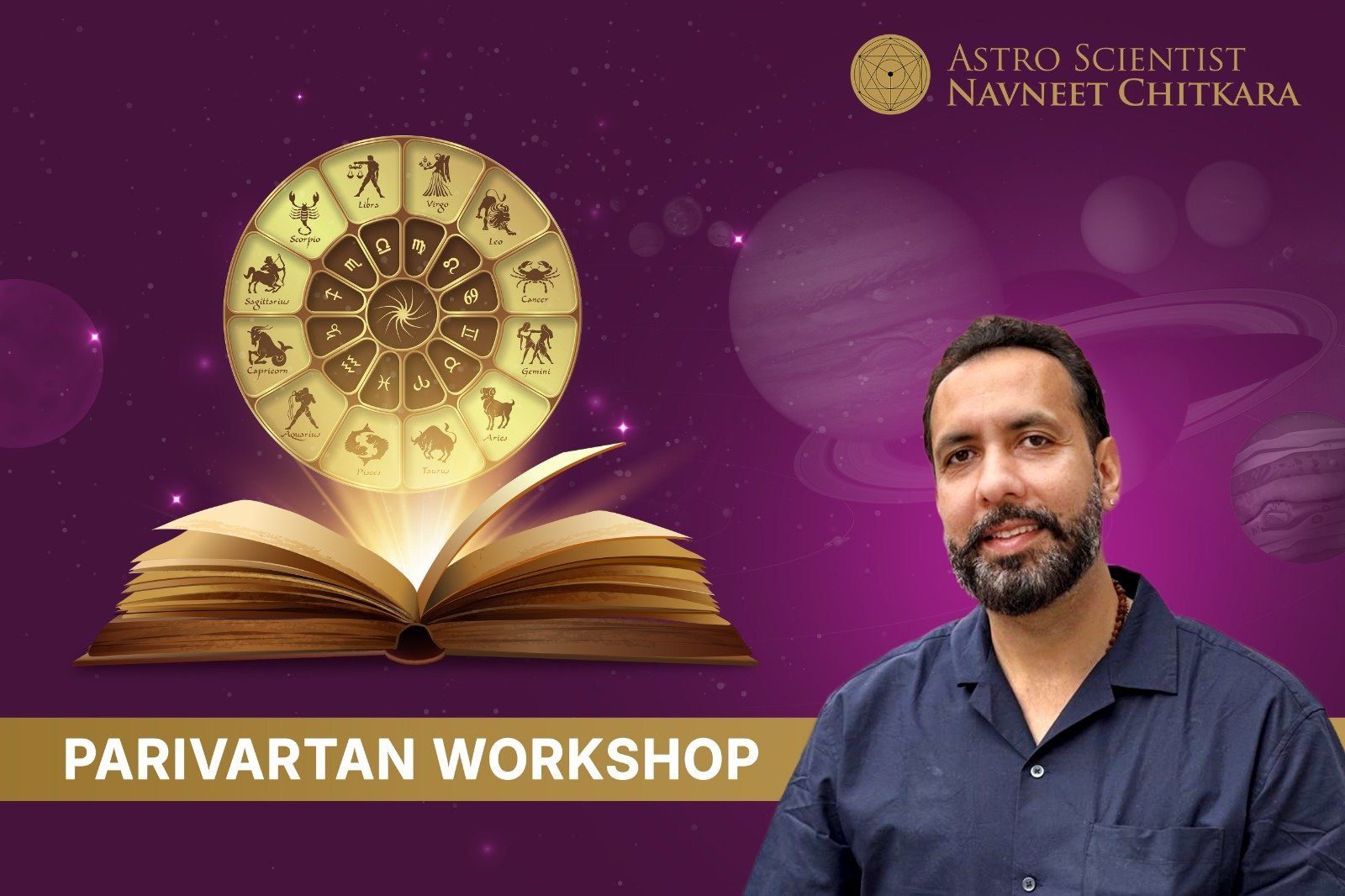
• Address widespread inaccurate beliefs.
• Clarify that planets do not physically exchange houses.
• Emphasize that there is more to Parivartan Yogas than the commonly believed 10%.
2. True Understanding of Parivartan Yogas
• Explain the meaning of “Parivartan” as “change” rather than “exchange.”
• Illustrate how planets change their character, nature, attitude, and energy rather than their positions.
• Provide examples to clarify the concept (e.g., clothing analogy, past life karma).
Understanding the Components of Parivartan Yogas
1. The Role of Nakshatras and Divisional Charts
• Importance of analyzing Parivartan Yogas in divisional charts and nakshatras.
• Understanding the influence of Parivartan Yogas on different bhavas.
2. Energetic Exchanges in Parivartan Yogas
• Interchange of energies between planets, gunas (qualities), tattvas (elements), and bhavas (houses).
• Understanding how these exchanges impact the native’s life.
3. Deity Associated with Parivartan Yogas
• Explain the role of Ma Durga/Ma Parvati/Ma Jagdamba in blessing Parivartan Yogas.
• Discuss appropriate remedies, including Durga mantras and devotion.
Types of Parivartan Yogas
1. Rashi Parivartan • Definition: Two planets in each other’s signs.
• Principles for analyzing Rashi Parivartan (e.g., gunas, tattvas, bhavas).
2. Amsha Parivartan
• Definition: Rashi Parivartan seen in divisional charts.
• Steps to analyze Amsha Parivartan and its effects on life areas like relationships (D9), career (D10), and property (D4). 3. Nakshatra Parivartan (Anshik or Sukshma Parivartan)
• Definition: Exchange of nakshatras between planets.
• Example and significance.
4. Bhava or Karaka Parivartan
• Definition: Exchange between the karakas of houses.
• Example and impact on native’s life.
Analytical Framework for Parivartan Yogas
1. Guna (Quality) Analysis
• Identify whether a planet gains or loses sattva, rajas, or tamas in the exchange.
• Understand the implications for the native’s personal and professional life.
2. Tattva (Element) Compatibility
• Evaluate compatibility of elements involved in the exchange (e.g., fire vs. water).
• Predict outcomes based on the synergy or conflict of elements.
3. Bhava (House) Interchange
• Analyze the environments or themes transferred between houses.
• Provide examples to illustrate effects (e.g., 7th house and 8th house exchange).
Case Studies and Examples
1. Chart Analysis of Lord Krishna
• Illustrate Parivartan Yogas with a detailed analysis of Lord Krishna’s chart.
• Discuss specific exchanges and their interpretations.
2. Example of Debilitated Planets in Parivartan
• Analyze scenarios where two debilitated planets are in Parivartan.
• Predict outcomes and potential improvements in planetary energies. Advanced Topics
1. Applying Parivartan Yogas to Marak, Badhaka, and MKS Planets
• Discuss how Parivartan Yogas can modify the effects of these challenging planetary positions.
• Provide guidelines for interpretation and predictions. Conclusion and Q&A 1. Recap Key Points
• Summarize the core concepts and methods discussed. • Reinforce the importance of accurate interpretation.
2. Q&A Session
• Open floor for questions and clarification on the discussed topics.
This outline provides a comprehensive structure for the workshop, ensuring a deep understanding of Parivartan Yogas and their implications in Vedic astrology
About Course
• Address widespread inaccurate beliefs.
• Clarify that planets do not physically exchange houses.
• Emphasize that there is more to Parivartan Yogas than the commonly believed 10%.
2. True Understanding of Parivartan Yogas
• Explain the meaning of “Parivartan” as “change” rather than “exchange.”
• Illustrate how planets change their character, nature, attitude, and energy rather than their positions.
• Provide examples to clarify the concept (e.g., clothing analogy, past life karma).
Understanding the Components of Parivartan Yogas
1. The Role of Nakshatras and Divisional Charts
• Importance of analyzing Parivartan Yogas in divisional charts and nakshatras.
• Understanding the influence of Parivartan Yogas on different bhavas.
2. Energetic Exchanges in Parivartan Yogas
• Interchange of energies between planets, gunas (qualities), tattvas (elements), and bhavas (houses).
• Understanding how these exchanges impact the native’s life.
3. Deity Associated with Parivartan Yogas
• Explain the role of Ma Durga/Ma Parvati/Ma Jagdamba in blessing Parivartan Yogas.
• Discuss appropriate remedies, including Durga mantras and devotion.
Types of Parivartan Yogas
1. Rashi Parivartan • Definition: Two planets in each other’s signs.
• Principles for analyzing Rashi Parivartan (e.g., gunas, tattvas, bhavas).
2. Amsha Parivartan
• Definition: Rashi Parivartan seen in divisional charts.
• Steps to analyze Amsha Parivartan and its effects on life areas like relationships (D9), career (D10), and property (D4). 3. Nakshatra Parivartan (Anshik or Sukshma Parivartan)
• Definition: Exchange of nakshatras between planets.
• Example and significance.
4. Bhava or Karaka Parivartan
• Definition: Exchange between the karakas of houses.
• Example and impact on native’s life.
Analytical Framework for Parivartan Yogas
1. Guna (Quality) Analysis
• Identify whether a planet gains or loses sattva, rajas, or tamas in the exchange.
• Understand the implications for the native’s personal and professional life.
2. Tattva (Element) Compatibility
• Evaluate compatibility of elements involved in the exchange (e.g., fire vs. water).
• Predict outcomes based on the synergy or conflict of elements.
3. Bhava (House) Interchange
• Analyze the environments or themes transferred between houses.
• Provide examples to illustrate effects (e.g., 7th house and 8th house exchange).
Case Studies and Examples
1. Chart Analysis of Lord Krishna
• Illustrate Parivartan Yogas with a detailed analysis of Lord Krishna’s chart.
• Discuss specific exchanges and their interpretations.
2. Example of Debilitated Planets in Parivartan
• Analyze scenarios where two debilitated planets are in Parivartan.
• Predict outcomes and potential improvements in planetary energies. Advanced Topics
1. Applying Parivartan Yogas to Marak, Badhaka, and MKS Planets
• Discuss how Parivartan Yogas can modify the effects of these challenging planetary positions.
• Provide guidelines for interpretation and predictions. Conclusion and Q&A 1. Recap Key Points
• Summarize the core concepts and methods discussed. • Reinforce the importance of accurate interpretation.
2. Q&A Session
• Open floor for questions and clarification on the discussed topics.
This outline provides a comprehensive structure for the workshop, ensuring a deep understanding of Parivartan Yogas and their implications in Vedic astrology
Course Content
Parivartan (Master Class)
-
Parivartan (Master Class) Part 1
00:00 -
Parivartan (Master Class) Part 1.2
00:00 -
Parivartan (Master Class) Part 2
00:00
Welcome to Rudra Vedic Learning Platform
The Rudra Vedic Learning Platform is designed to offer a smooth, structured, and spiritually aligned learning experience for all students — from beginners to advanced practitioners. Follow the steps below to make the most of your learning journey.
1. Login & Dashboard Access
Log in using your registered email ID or mobile number.
After login, you will land on your Student Dashboard.
The dashboard displays:
Enrolled courses
Upcoming live classes & masterclasses
Course progress and completion status
2. Explore & Enroll in Courses
Visit the Courses section to explore available programs.
Courses are categorized by:
Beginner, Intermediate & Advanced levels
Astrology, Vastu, Karma Shastra, Spiritual Sciences & more
Enroll in new courses directly from the platform.
3. Access Video Lessons
Click on any enrolled course to view its modules.
Each module contains:
Recorded video lectures
Lesson-wise structured content
Videos can be paused, replayed, and watched anytime as per learning convenience.
4. Live Classes & Masterclasses
Upcoming live sessions will be visible in the Live Classes section.
Join live classes directly from the Whatsapp group at the scheduled time.
Replay recordings will be available if you miss a live session.
5. Study Materials & Resources
Downloadable PDFs, notes, charts, and reference materials are provided inside each course.
These materials support deeper understanding and practical application.
6. Assignments & Practice
Some courses include:
Practice exercises
Case studies
Assignments for self-assessment
Complete assignments to strengthen conceptual clarity.
7. Track Your Progress
The platform automatically tracks:
Completed lessons
Pending modules
Overall course progress
Progress tracking helps maintain learning discipline and consistency.
8. Certificates of Completion
Upon successful completion of a course, eligible students receive:
Digital Certificate of Completion
Certificates can be downloaded directly from the platform.
9. Support & Assistance
For technical issues or course-related queries:
Use the Support / Help section
Contact the Rudra Vedic team via provided WhatsApp or email support.
10. Learning Guidelines
Maintain discipline and regular study hours.
Re-watch lessons for better clarity.
Apply learnings practically for deeper mastery.
Respect course content and avoid unauthorized sharing.
Begin Your Journey with Rudra Vedic Academy
This learning platform is not just a course system, but a guided path toward authentic Vedic knowledge, practical wisdom, and spiritual growth.
Learn • Practice • Transform
Student Reviews
No reviews available.